K-12 Building Condition Survey – They say timing is everything.

by Ron Gillespie
As you are aware, the New York State Education Department (NYSED) requires all public school districts and Board of Cooperative Educational Services (BOCES) in New York to complete a Building Condition Survey (BCS) for occupied public school buildings every five years. In late 2019, changes in the New York State Education Law were enacted which alters the five year cycle schedule for school districts to conduct these surveys. After years of lobbying by the New York State School Facilities Association, this was a welcome change.

So what’s in it for you? I believe that this change will benefit school districts as well as A/E firms, construction management firms, and contractors across the state. How? Previously, all school districts across the state had to complete their BCS in the same year. This created a heavy demand on the availability of A/E and construction management firms. By staggering the years that districts are required to complete their BCS, it will relieve the surge that we have seen every five years with districts all trying to file in a timely manner. It also reduces the demand for qualified A/E firms and construction management professionals to complete the testing and inspections needed to provide a comprehensive report.

The BCS is the primary instrument school districts use to develop capital project plans, identify scope, as well as prioritize needed work to develop capital schedules and budgets. When all 700+ school districts are required to complete the BCS in the same year, this creates a peak in capital project planning and design across the state that in turn generates an influx of projects being submitted to the State Education Department (SED) for review and approval. This results in bottlenecks and delays for districts receiving building permits.

The BCS acts as a “report card for facilities.”

A team consisting of at least one licensed engineer or registered architect will visually inspect all occupied school buildings to assess the current conditions of the space, major building infrastructure, and grading condition. They are looking for evidence of structural failure, deterioration, and probable useful life as well as need for maintenance and replacement. Your survey results will include opinions on the building’s condition, advice on any critical or future repairs, and the consequences of non-repair.

The purpose of a BCS is to properly plan and prioritize capital improvement projects. New York State refers to the BCS when planning for building aid reimbursement to school districts. With Welliver on your BCS team, we can provide a 360-degree view of the data. Real-time analysis can be performed incorporating the current climate, a district’s future goals, estimated cost to replace/repair, potential return on investment, and feasibility. Our depth of knowledge includes cost estimating, NYSERDA funding opportunities, capital project schedule development, constructability reviews, and MEP analysis and life cycle costing.

School districts to get relief 

Under the new schedule, districts must conduct Building Condition Surveys (BCS) on a staggered schedule as assigned by the Commissioner in calendar years 2020 through 2024, and every five years on that same five-year cycle thereafter. You should experience a positive impact in that this should create more favorable bid environments and less workforce shortages, enabling more projects to be completed on time. Spreading the schedule over a five-year cycle should also create a smoother flow for the capital project process resulting in better project review turn arounds and more favorable bid results for districts across the state.

Where does your district fit in to this new schedule?

And if it’s not in the next couple of years what other requirements do you need to complete in the interim? Answers to these questions and many other pertinent details can be found on the New York State Education Department website at: www.nysed.gov. From the home page click on the “school business” tab and then select “facilities planning” from the dropdown menu. About a third of the way down this page you will find the heading BUILDING CONDITION SURVEY AND VISUAL INSPECTION, click on the highlighted “webpage” link and you will find detailed information on the assignment lists that tells you which year your district is required to complete the BCS as well as interim visual inspections that may be required, BCS detailed instructions, a sample BCS document, and a pretty comprehensive FAQ section.

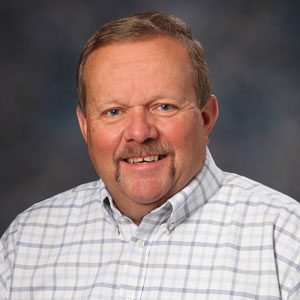
Ron brings a significant depth of knowledge and experience conducting Building Condition Surveys, assessing results, and implementing capital improvement projects. He is the former Director of School Facilities and Operations for the Corning-Painted Post Central School District. Ron cultivated a 36-year career managing all facilities and grounds, maintenance, and capital projects for the district. Ron joins the Welliver team as K-12 Project Liaison. His focus is on assisting school districts with capital planning and project execution. Ron can be reached at [email protected].

Achieving Excellence in Construction

by Andrew Gimbar, Jr., PE, LEED® AP

Welliver employees come to work each day to construct buildings. Our efforts typically support customers in organizations whose jobs are not directly related to construction but rather, in manufacturing, education, medical care, retail sales, wholesale, warehouse storage, etc. Subject to dynamic influences, the facilities in which they work may be too small, inefficient, unattractive, unsafe, or otherwise unsatisfactory. Recognizing this, someone in pursuit of excellence may champion a project fostering new-found excellence. Thus, a project is born.

Now members of the customer organization will assume critical roles that will require them to exercise skills not necessarily required to carry out their normal responsibilities. Although highly skilled at their jobs, they may find additional skills are needed to add value to the project. Focusing on construction projects, professional consultants such as architects, engineers, construction managers, cost estimators, and tradesmen are needed. Although these professionals will have special skills, they will be most effective when supported and appropriately directed by communicative owner’s representatives. After all, there is typically much at stake; large investments in time and money will depend upon sound decision making to achieve the essential goals, while staying within budget, meeting code requirements, and addressing stakeholder concerns.

Independent of project size, divergent stakeholder concerns, experiences, skills, and practices are expected to create conflict including:
• Total cost may conflict with available budget and compromise is required to get to the finish line
• Tremendous regard for a project element may foster strong and compelling arguments and opposition to competing concerns
• Those most affected by project outcome have no previous project experience and have no expectations of future experiences. Nonetheless, they want to get it right.
• Goals are likely to be of paramount importance to those who will work in the facility, and they will have to be balanced with things like safety, sustainability, aesthetics, disruption, and schedule.

Resolving this conflict may cause trying circumstances, and for the best outcomes, perfection must yield to excellence. Respectful inclusive communication fostering generous participation from all stakeholders will develop deliberate and informed decisions. These processes are what the project participants will remember most. And well thought out and inclusively generated solutions to the problems encountered will produce the best results. When projects are delivered with strong input from the owner’s team, decisions will represent the customer’s needs, and imperfections can be accepted as gateways to excellence.

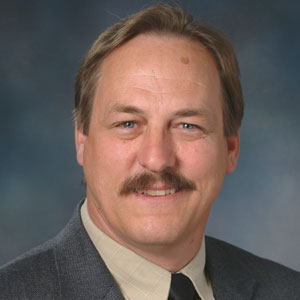
Andy has been a champion of sound decision making for more than three decades. He solves problems and assures high levels of satisfaction by end users within the built environment. Supporting construction management, Andy fosters innovation and excellence in sustainable mechanical system application. He estimates mechanical system construction costs subject to a broad range of evolving information in both pre-construction and construction phases of job development. Andy knows that pre-construction services support owner’s representatives, design professionals, and project stakeholders by identifying options and tradeoffs with iterative cost estimates for mechanical portions of their projects. Andy refines the information as design is developed in phases: conceptual, schematic, design development, and construction documentation. As Director of Mechanical Services and Mechanical Estimator for Welliver, Andy works with clients representing a broad range of market sectors including higher education, industrial, healthcare, and K-12 education.


Building opportunities for D/MWBE

by Estella Swartout

Welliver is a victor of collaboration with disadvantaged, minority, and women owned companies (D/MWBE). As a general contractor and construction manager, Welliver is cognizant of D/MWBE and Equal Employment Opportunity (EEO) requirements in all bidding situations. We are seeing an increase in requests to meet the D/MWBE goals. In these situations, Welliver uses the New York State database along with Welliver’s proprietary D/MWBE vendor database to reach out to certified companies in the region which match the scope of work needed for that particular project. We recognize the importance of including as many D/MWBE companies in our bidding process to ensure a high level of participation. If the requirements cannot be met, it is also important that Welliver has proof of adequate “good faith efforts” and communication in our attempt to find certified D/MWBE’s for any project. Several of our projects, such as the Hill-Rom/Welch Allyn Inc. Warehouse Expansion, Rochester Institute of Technology Magic Spell Studios, and Schuyler Hospital Expansion, have D/MWBE and EEO goals with state, federal or grant funding associated with the contract.

As a project administrator, I know from experience that monthly D/MWBE and EEO tracking is an important task for any active project. We communicate regularly with New York State to ensure all reporting data is tracked and entered into the NYS Tracking Database as soon as each monthly audit opens. EEO workforce tracking and D/MWBE payment reports are required each month. EEO workforce reports are used for employee tracking purposes to show diversity in the workforce. D/MWBE payment reports are tracked to ensure all D/MWBE companies are being paid efficiently and on time. It is critical that everything is monitored accurately and all paperwork is compliant and submitted. Funding is only distributed to the Owner at the end of the project if the goals and good faith efforts have been met.

Welliver strives to engage with all D/MWBE organizations no matter the classification of work, giving all companies an opportunity to bid competitively. Welliver’s due diligence in all bidding situations is important to be successful and to be prepared for any project requirements which are known to change at any given time. When we have successfully fulfilled all requirements for the project, I get a feeling of great satisfaction when I receive the completion email from the New York State Compliance Contact Division. In my opinion, Welliver goes above and beyond to make our customers and our subcontractors feel comfortable and confident in their work, not only in the field but in the office as well.

Estella brings more than a decade of experience working on projects requiring D/MWBE and EEO participation and knows her way around state, federal, and grant funding regulations associated with contracts. As a seasoned project coordinator in the construction industry, Estella is an integral member of the project team from start-up to close-out. Her contribution to the project’s success includes accurate project documentation, timely communication with client and team, and administration of up-to-date project intel. Detail oriented and highly organized, Estella has applied her knowledge of D/MWBE and EEO data tracking and reporting for numerous clients including Schuyler Hospital, Wayfair LLC, and Hill-Rom/Welch Allyn Inc.


Cooperative Education can make all the difference.

by David Collins, EIT

When it came to choosing my area of study for college, the choice seemed very difficult because I was being asked to pick what I wanted to do for the rest of my life. Some classes in high school gave me an idea of what I wanted to do. I ultimately chose Civil Engineering because of the broad scope of what I could do with that education. I knew I enjoyed seeing things get built and I wanted to be a part of that.
What made all the difference for me when it came to preparing for a career were my Cooperative Education experiences. I believe that a year of immersive learning in your chosen field should be required no matter what field you are in. My Co-Op experience showed me what day-to-day life in my career would look like and really let me evaluate whether or not that was something I wanted to do. A Co-Op also gives the opportunity to “audition” for a full time position with a company that you like. An eight month audition is a great chance to make a good impression.

During my third-year of school at Rochester Institute of Technology (RIT) I was required to start my first Co-Op that would last eight months. The Co-Op application process was a long one for me because I wanted to find the right opportunity. I knew I wanted to try the construction side of the industry instead of the design side, mainly because the idea of being in an office on a construction site seemed a lot more fun to me. Welliver offered me a position as a project engineer/intern on a large renovation project. Once my Co-Op term ended I continued to work part-time for Welliver while resuming my studies in school. Welliver once again offered me an opportunity as a full-time intern for eight months. My project manager involved me in more tasks than a short summer internship would have allowed. I learned how to coordinate with subcontractors, work with architects to solve challenges on the jobsite, manage the RFI and submittal process, as well as meet with owners and facilitate walkthroughs.

Having a second full time internship offered even more opportunities when Welliver hired me to work on the RIT MAGIC Spell Studios project right on RIT’s campus. I was involved with subcontractor buyout, managing the change order process, LEED documentation, project scheduling, and owner coordination. An important part of a successful Co-Op experience is working with a company that gives you the opportunity to learn more and succeed. For me, Welliver did a great job at this. When I would start to get comfortable with what I was doing, my project manager would recognize that and get me involved with more challenging tasks. Sometimes the situation would require me to reach out and ask my project manager for more work to do, which is a good skill to learn because it shows initiative and a willingness to get more involved.

At graduation I already had two and a half years of valuable experience in the construction industry, making me a qualified candidate to hiring companies. I was not being considered an “entry-level” employee coming out of college. My co-op experiences were highly valued by employers, because for them it meant less time required training a new employee.

When making the decision where I should work as a full-time employee, Welliver just made sense. The time on Co-Op had allowed me to build many relationships within the company that made me feel comfortable and a member of the overall team. Welliver felt like a place where my skills were valued and everywhere else I looked I did not get that same level of value. The opportunities I received on Co-Op to learn and grow as an employee were also a major factor, because I knew those opportunities would continue into my full-time status.

By the time I graduated and started to settle in to my full time position at Welliver, I was well prepared from those Co-Op experiences to be an Assistant Project Manager. I can confidently say that Cooperative Education has helped prepare me for a career in construction.

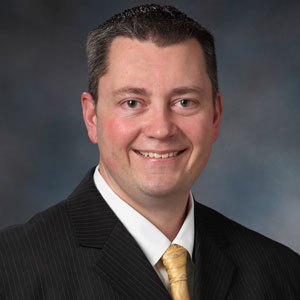
A recent graduate of Rochester Institute of Technology, David joined the Welliver team in 2016 as a Co-Op employee. He has experienced first-hand what it takes to successfully transition a co-op internship into full-time employment. Currently an assistant project manager with Welliver, he applies his skills on several construction projects for clients in the higher education market including Rochester Institute of Technology, University of Rochester, and Cornell University.


Lean Construction: Trimming the Excess

By: Jason Edsall, CM-LEAN

Lean Construction is a bottom up approach which results in collaborative team commitment, a production planning system, management of workflow, and building reliability. We take a proactive stance to make work happen by removing constraints ahead of time as much as possible. The end result of the production planning system is to achieve a daily detail of the project and resource allocation to complete tasks reliably, efficiently, and effectively. The following compares a Lean approach to traditional project management for project planning:


Baseline Schedule

Lean – GC develops a summary level schedule with key milestones.
Traditional – GC develops a detailed schedule with minimal trade input for use throughout the duration of the job.

Trade Coordination

Lean – All trades work together to develop the sequence of activities working backwards from each milestone. Activities are planned to a detail of one week duration. This is considered a “Pull Plan”.
Traditional – Superintendent dictates when work is to be done based on baseline schedule with minimal regard to work constraints and pre-requisites.

Look Ahead Planning

Lean – All trades collaborate to detail “make ready” plans for activities in the upcoming six weeks, based on the Pull Plan. Constraints and pre-requisites are recorded and tracked for resolution prior to work occurring.
Traditional – Superintendent dictates when work is to be done based on baseline schedule with minimal regard to work constraints and pre-requisites. Any impacts result in recovery schedules.

Weekly Work Plans

Lean – All trades work in conjunction to detail daily activity sequences for an upcoming week with commitments by all to follow the plan.
Traditional – GC issues a two-week snippet from the master schedule which has often been impacted and pushes for recovery.

Daily Huddle

Lean – All trades gather each day for a brief review of activities to occur and state deliveries. Any new-found constraints are identified for action.
Traditional – Daily meetings rarely occur.

Measurement

Lean – Accuracy of commitments made by trades is reviewed at the weekly work plan meetings. Percentage of planned work which was completed is recorded for each trade.
Traditional – Progress is recorded on a monthly basis during updates of the master schedule.

A Lean Construction approach emphasizes the reduction of waste. The various types of waste in construction are categorized as follows with an example of means to reduce.

Defects/Rework – resources are wasted when corrections need to be made.
Action: Emphasize quality control and coordination to prevent conflicts.

Waiting – Workers waiting for work or work waiting for workers.
Action: Strive for a continuous production system and elimination of bottlenecks.

Transportation of Goods – Continued handling of goods is a waste of resources.
Action: Goods should be received in batches based on the rate of usage. Any large quantity deliveries should be held at a remote area.

Motion – Workers moving excessively or unnecessarily to perform tasks is a waste of resources.
Action: Stage items at the closest proximity to the work as possible or utilize mobile systems to allow items to move with the work.

Inventory – Excess inventory can impede work or cause additional handling. A depleted inventory can cause workers to wait.
Action: Maintain a balance of inventory and institute triggers to identify when replenishment is needed before completely depleted.

Overproduction – An excess amount of work in an unfinished state can increase potential for damage/rework and may not be coordinated and also cause rework.
Action: Maintain a continuous workflow with small batch hand-offs between trades. All work in a sequence progresses at the rate of the slowest producer.

Unnecessary Steps – Efforts which do not contribute to the progression of a system are wasted efforts.
Action: Reduce and eliminate actions which do not add or provide value.

Underutilized Talents – Workers with a high level of skillsets which are assigned to basic tasks are considered a wasted resource.
Action: Understand the potential of all workers and utilize crews with common skillsets appropriate for the work.

By following these practices, the variation in work observed on traditional projects will be reduced and result in a consistent output with continuous coordinated workflow. The superintendent and foreman will interact differently whereas the foreman will assume a higher level of ownership in planning the work and responsibility to honor commitments made. Trades will work together to produce work in a fashion that is predictable and reliable.


An accountable and highly dedicated construction professional, Jason has been an on-site project manager for many high profile projects. AGC CM-LEAN Certified, Jason has worked in the construction industry for more than two decades and brings significant experience and expertise in Lean Construction, scheduling, field engineering, commissioning, and management leadership on projects representing diverse market sectors.


Labor Market and Building Trends

By: Nick Robertson, PMP, CM-LEAN

The construction industry is constantly evolving to become more efficient, hurdle barriers, and conform to increasingly stringent safety and code regulations. Over the course of the next 3 to 5 years and potentially beyond, the industry will need to adapt again. This time the lack of qualified manpower will become a primary obstacle. As the market begins to pick up steam, we are seeing an increase in construction in our local market. However, the amount of high school graduates who are choosing to go into the trades is decreasing while the average age of the trades worker is increasing. Over the past 3 years we have seen manpower become a limiting factor for projects, and it is only getting worse. Unless innovative solutions are implemented into the construction progress this is going to drive cost and schedule in a negative direction for owners.
Contractors who will be successful over the coming years will be those able to adapt to this challenge by utilizing concepts like LEAN Construction planning, modularization, diversifying their subcontractor base, and using technology to eliminate waste from the process. These practices allow contractors to utilize efficiencies in manufacturing, reduce the impact of weather, identify and eliminate waste, draw labor from less saturated markets, and “do more with less”. This will translate to lower costs for owners as well as allow project schedules to be expedited despite the labor shortages.

One key to the implementation of these processes is that they are most effective in the IPD (Integrated Project Delivery) method of construction. Hiring a Construction Manager in advance of design allows building experts to help facilitate a design with these practices in mind. Far too often an owner is not able to maximize savings because when the builder is hired the design limits their ability to remove waste and use some of these best practices. The most successful projects will be those when owners, builders, and design teams come together to maximize the efficiencies and deliver high quality projects using these innovative solutions.

Nick is a project executive who oversees multi-million dollar projects and project teams. His attention is on developing relationships with owners and subcontractors, conflict resolution, and staffing to ensure overall project success. Nick enjoys taking on the most complex and challenging projects regardless of market sector. His clients represent a diverse range including commercial/residential, higher education, development, and industrial.


Effective Change and Communication

By: Dale Partridge, Director of Safety

Quite often the construction company is faced with changes in policy or procedure for a variety of different reasons. There are many things that affect the way that a change is implemented. When faced with these changes, it is very important to balance communication to your employees while satisfying the legal side of the business.

Employees are tasked with learning and knowing rules, regulations, company policies, proper tool handling, plus a variety of other items that need to be committed to memory. When current policy is changed or new policies are implemented, it is critical to communicate in a manner that is most easily interpreted and understood.

The first hurdle of interpreting this change is in how we put it into a readable format. If left to the legal department, the written change may be challenging for the average person to interpret and understand. This type of process could cripple the intent of the change right from the beginning. Remember, the purpose is to give employees the proper training and tools to complete their jobs safely. If we hand them a legal document and ask them to comply we are setting ourselves and them up for failure. There is a balance to meeting the needs of the legal department and effectively putting a change in writing that can be understood by all employees.

Lastly we need to consider the delivery to the affected employees. It is key for the delivery method to be done by appropriate personnel. No matter which method you use for delivery, you should ensure that it is done by the appropriate person(s). This could be a third party or perhaps a person who is respected and seen in the field a majority of the time. Good delivery can mean the difference between falling on deaf ears or involving the employees and having them believe that the changes are for their safest interests.

In conclusion, one can see that a change is just not a pen stroke on a piece of paper. Balancing all aspects of a change starts at the very beginning and continues all the way through implementation. We need to think carefully about all aspects of a change so that we can keep our companies, and most importantly our employees, safe and healthy. Understanding and communication are key to a productive, healthy, and safe workforce that allows us all to benefit.

A veteran professional, Dale is a subject matter expert on the topic of safety with a diverse background in compliance and quality control. Paired with an extensive list of OSHA training and certifications, he is responsible for the overall status and facilitation of the company’s safety training programs, as well as safety compliance, tracking, reporting, documentation, and oversight of all on-site safety managers. Dale creates an environment of personal accountability, and plays an integral role in maintaining Welliver’s position as a leader in workplace safety.